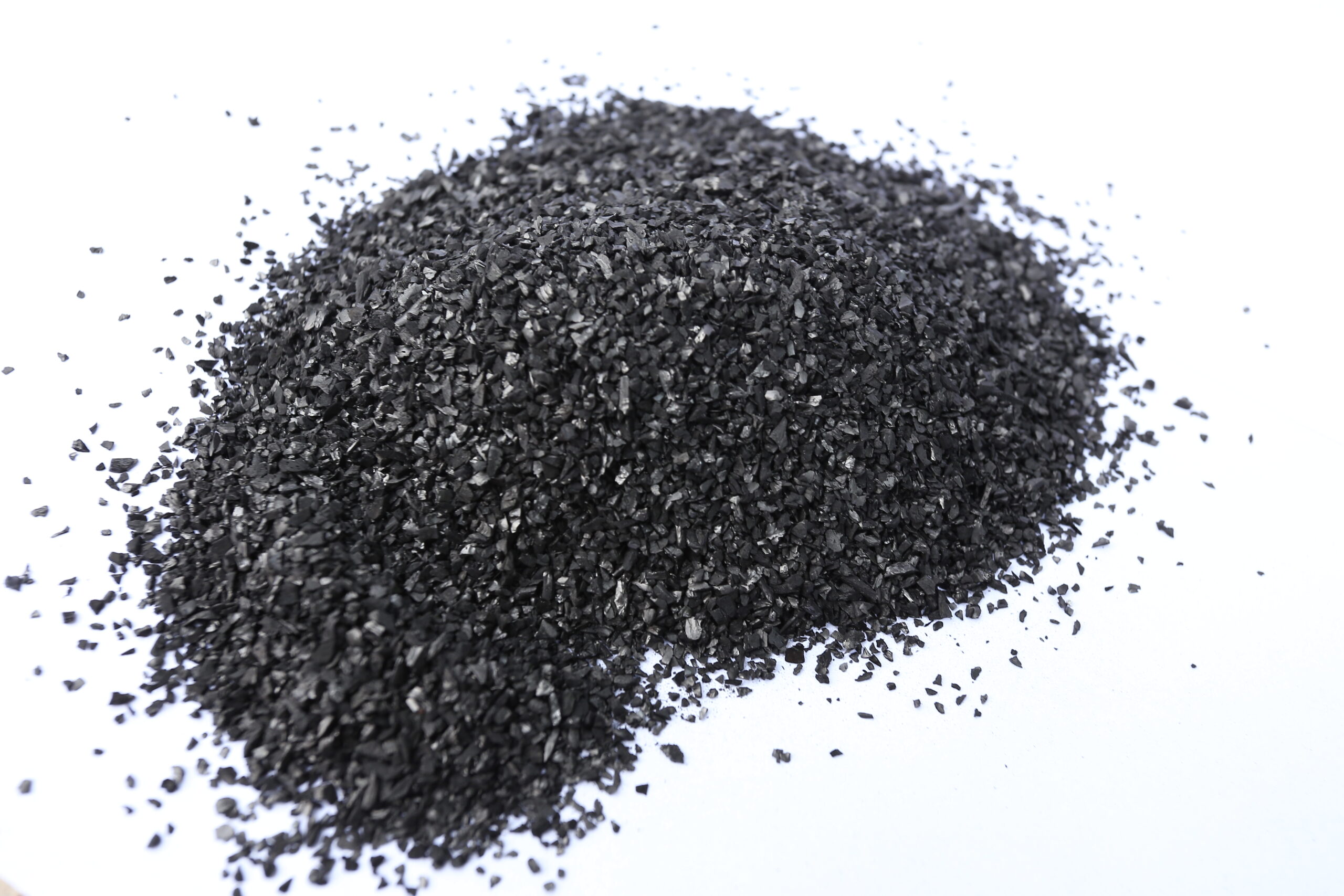
The adsorption capacity of activated carbon is a very important factor in testing the quality standard of activated carbon. Today we will explain the adsorption characteristics of activated carbon in detail.
Activated carbon adsorption is a method of removing one or more substances in water by adsorbing them on the surface of activated carbon using porous activated carbon. The objects to be removed include soluble organic matter, synthetic detergents, microorganisms, viruses and a certain amount of heavy metals, and can also decolorize, deodorize and purify the air.
Activated carbon, sulfonated coal, zeolite, coke, etc. are all commonly used adsorbents for water treatment. After activation, the carbon lattice of activated carbon forms developed pores of different shapes and sizes, which greatly increases the specific surface area and improves the adsorption capacity. The effective radius of the pores of activated carbon is generally 1-10000nm, the radius of the small pore is below 2nm, the radius of the transition pore is generally 2-100nm, and the radius of the large pore is 100-10000nm. The volume of the small pore is generally 0.15-0.90mL/g, the area of the transition pore is generally 0.02-0.10mL/g; the volume of the large pore is generally 0.2-0.5mL/g.
Activated carbon is a very fine carbon particle with a large surface area, and there are even smaller holes in the carbon particles – capillaries. This capillary has a strong adsorption capacity. Since the surface area of the carbon particles is large, it can fully contact with the gas (impurities). When these gases (impurities) touch the capillary, they are adsorbed and play a purification role. The surface area research of activated carbon is very important. The specific surface area test data of activated carbon is only true and reliable when it is detected by the BET method. There are many instruments in China that can only perform direct comparison method tests. At present, the specific surface area test at home and abroad uniformly adopts the multi-point BET method. The specific surface area determination standards formulated at home and abroad are based on the BET test method. Please refer to the Chinese National Standard (GB/T 19587-2004) – Method for determining the specific surface area of solid substances by the gas adsorption BET principle.
Specific surface area testing is actually a time-consuming task. Due to the different adsorption capacities of samples, the testing of some samples may take a whole day. If the testing process is not fully automated, the tester cannot leave at any time and must be highly focused, observing the dashboard and operating the knobs. A little carelessness will lead to failure of the testing process, which will waste a lot of precious time for the tester. F-Sorb 2400 specific surface area tester is an instrument that can truly realize the BET method detection function (with direct comparison method). More importantly, F-Sorb 2400 specific surface area tester is the only fully automated and intelligent specific surface area detection equipment in China so far. Its test results are highly consistent with international standards and have good stability. At the same time, it reduces human errors and improves the accuracy of test results.
Factors affecting activated carbon adsorption include: the characteristics of activated carbon; the characteristics and concentration of the adsorbate; the pH value of wastewater; the characteristics of suspended solids content; the contact system and operation mode, etc. Activated carbon can effectively adsorb chlorinated hydrocarbons, organophosphorus and carbamate pesticides, as well as phenyl ether, n-nitrochlorobenzene, naphthalene, ethylene, xylenol, phenol, DDT, aldrin, alkylbenzene sulfonic acid and many esters and aromatic compounds. The secondary effluent also contains organic matter that is not adsorbed by activated carbon, such as intermediate degradation substances of protein, which are more difficult to be adsorbed by activated carbon than the original organic matter. The removal capacity of activated carbon for THMS is low, reaching only 23-60%. The activated carbon adsorption method is combined with other treatment methods, and the ozone-activated carbon method, coagulation-adsorption activated carbon method, Habberer process, activated carbon-diatomaceous earth method, etc. have emerged, which significantly prolongs the adsorption cycle of activated carbon, reduces the dosage, and greatly improves the treatment effect and scope.