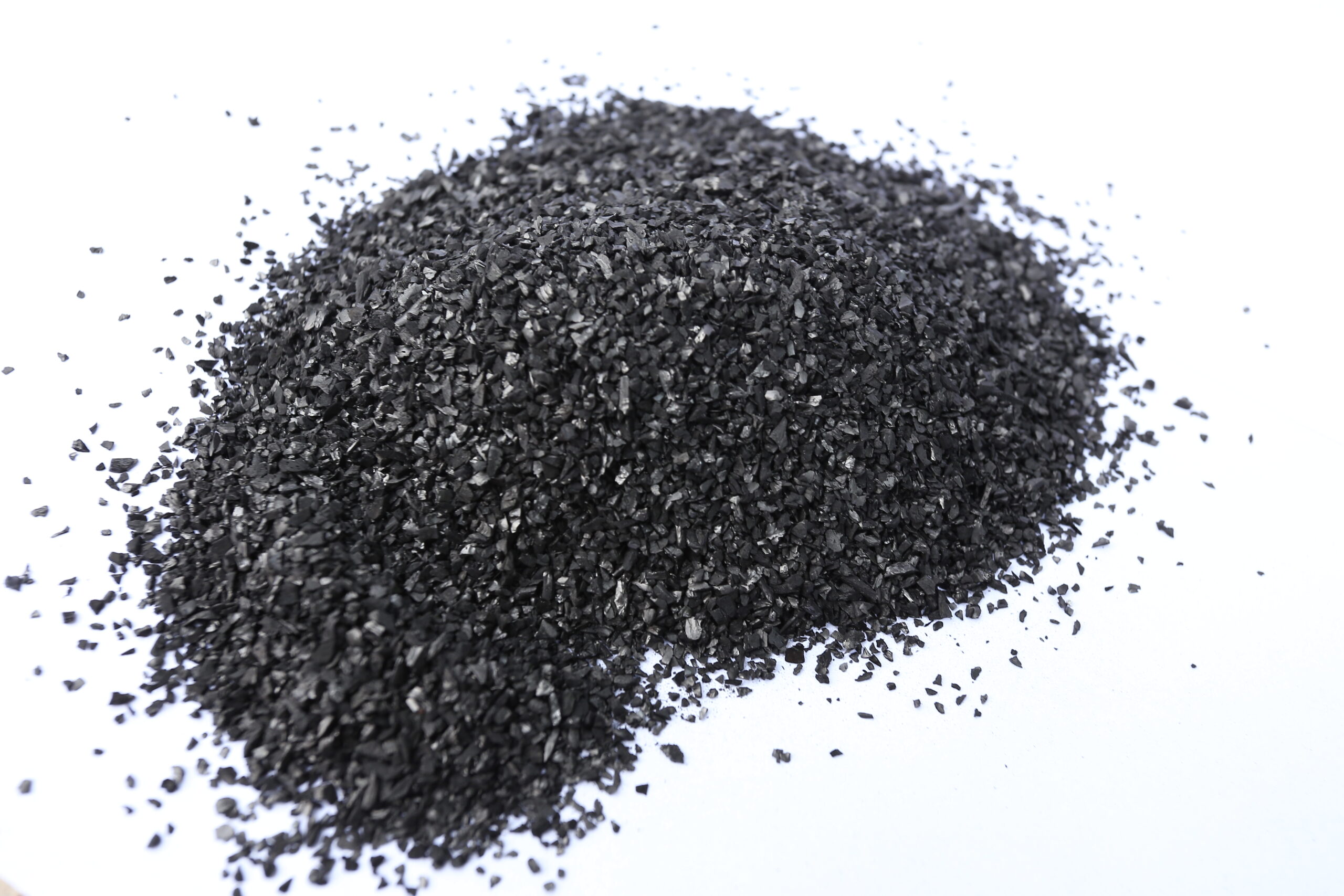
According to the different forces between activated carbon molecules and pollutant molecules during the adsorption process, adsorption can be divided into two categories: physical adsorption and chemical adsorption (also known as active adsorption). In the adsorption process, when the force between activated carbon molecules and pollutant molecules is van der Waals force (or electrostatic attraction), it is called physical adsorption; when the force between activated carbon molecules and pollutant molecules is chemical bond, it is called chemical adsorption. The adsorption strength of physical adsorption is mainly related to the physical properties of activated carbon, and has little to do with the chemical properties of activated carbon. Since the van der Waals force is weak, it has little effect on the structure of pollutant molecules. This force is the same as the intermolecular cohesive force, so physical adsorption can be compared to condensation. The chemical properties of pollutants remain unchanged during physical adsorption.
Because the chemical bond is strong and has a greater impact on the structure of pollutant molecules, chemical adsorption can be regarded as a chemical reaction, which is the result of chemical action between pollutants and activated carbon. Chemical adsorption generally involves electron pair sharing or electron transfer, rather than simple perturbation or weak polarization, and is an irreversible chemical reaction process. The fundamental difference between physical adsorption and chemical adsorption lies in the force that produces the adsorption bond.
The adsorption process is the process in which pollutant molecules are adsorbed to the solid surface, and the free energy of the molecules will decrease. Therefore, the adsorption process is an exothermic process, and the heat released is called the adsorption heat of the pollutant on this solid surface. Due to the different forces of physical adsorption and chemical adsorption, they show certain differences in adsorption heat, adsorption rate, adsorption activation energy, adsorption temperature, selectivity, number of adsorption layers and adsorption spectrum. Activated carbon adsorption technology has been used for refining and decolorization in industries such as medicine, chemical industry and food in China for many years. It has been used for industrial wastewater treatment since the 1970s. Production practice shows that activated carbon has excellent adsorption for trace organic pollutants in water, and it has good adsorption effect on industrial wastewater such as textile printing and dyeing, dye chemical industry, food processing and organic chemical industry. In general, it has unique removal ability for organic matter in wastewater represented by comprehensive indicators such as BOD and COD, such as synthetic dyes, surfactants, phenols, benzene, organochlorine, pesticides and petrochemical products. Therefore, activated carbon adsorption has gradually become one of the main methods for secondary or tertiary treatment of industrial wastewater.
Adsorption is a slow process in which a substance attaches to the surface of another substance. Adsorption is an interfacial phenomenon, which is related to the changes in surface tension and surface energy. There are two driving forces that cause adsorption, one is the repulsion of solvent water on hydrophobic substances, and the other is the affinity and attraction of solids on solutes. Adsorption in wastewater treatment is mostly the result of the combined action of these two forces. The specific surface area and pore structure of activated carbon directly affect its adsorption capacity. When selecting activated carbon, it should be determined by experiments based on the water quality of the wastewater. For printing and dyeing wastewater, it is advisable to select carbon with developed transition pores. In addition, ash content also has an effect. The smaller the ash content, the better the adsorption performance; the closer the size of the adsorbate molecule is to the carbon pore diameter, the easier it is to be adsorbed; the concentration of the adsorbate also affects the adsorption amount of activated carbon. Within a certain concentration range, the adsorption amount increases with the increase of the adsorbate concentration. In addition, water temperature and pH value also have an effect. The adsorption amount decreases with the increase of water temperature.